 CUPNORA
CN75C
70D↔80BBra Size Chart A B C D — What the Letters Mean
A, B, C and D are positions within a sizing system. The band and the measurement convention are part of the meaning.
Snug US/UK method • provisional rules • not a fitting guarantee
Example measurements — replace with your own. 75 / 90 cm
US30DDD/F
28G↔32DD/EUK30E
28F↔32DDEU75C
70D↔80BFR90C
85D↔95BAU8E
6F↔10DDJP75C
70D↔80BSister sizes: Smaller band ↔ Larger band
Measurements are calculated in your browser and are not sent to a server.
From body size to a cup component
A garment size does not specify cup width, depth or pad thickness. These are supplier-listed component references, not a fit guarantee. Select a sample against the garment pattern.
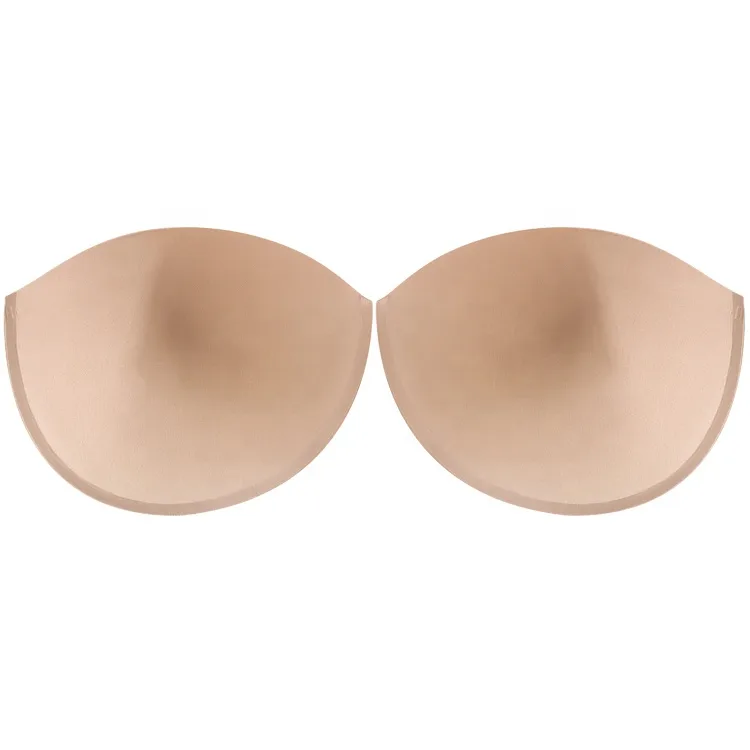
BCD
- Listed type
- Waterdrop bra pad
- Supplier size labels
- B/C/D
- Cup width
- Confirm with supplier
- Pad thickness
- 0.6 CM
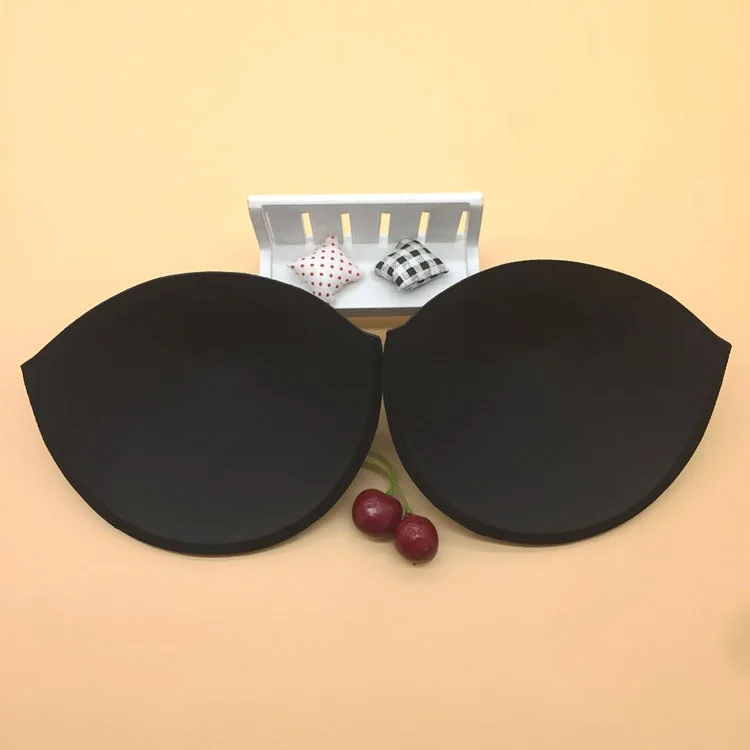
BCD
- Listed type
- Semicircle
- Supplier size labels
- B/C/D / B / C / D
- Cup width
- Confirm with supplier
- Pad thickness
- 0.7CM
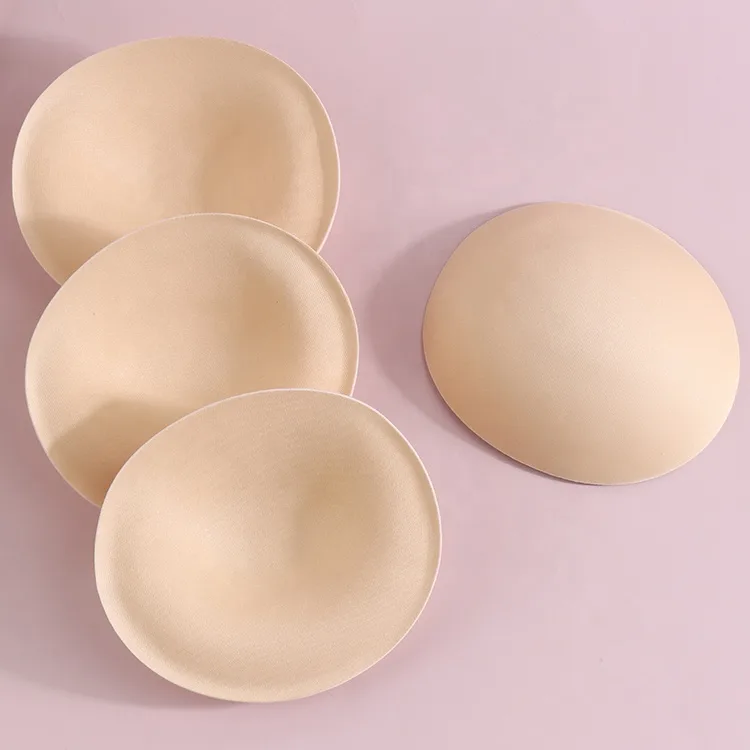
JH02
- Listed type
- bra pads for swimwear
- Supplier size labels
- Uniform Size / A / B / C / D
- Cup width
- Confirm with supplier
- Pad thickness
- 1.8cm
Source-listed; not independently measured.
Explore cup componentsRead a complete size instead of one letter
A complete size combines a band reference with a cup position. The same letter printed beside different bands does not describe a single fixed volume. This matters when discussing whether a garment feels too large: the band can be unsuitable even when the cup outline looks plausible. Start with both body measurements and preserve the full label of any garment you compare. Saying only “I wear C” leaves essential information missing.
Why an A-to-D chart changes between systems
The provisional US/UK reference advances in inch-difference steps, while the JP/CN reference uses centimetre centres starting at ten. The EU table in this tool uses another centimetre step. Consequently, the letter B does not mean one universal bust-minus-underbust distance. Look at the column heading and the measuring instructions before reading the row. A mixed chart that combines a familiar band with an unrelated cup difference can give a convincing but inconsistent answer.
A D cup is not the end of the sequence
Many brands offer sizes beyond D, using letters, repeated letters or both. A four-letter chart is useful for learning the principle but should not be mistaken for the full range of bodies or garments. The calculator shows configured extended sequences and displays an unavailable result when those bounds are exceeded. It does not force every measurement into D or invent an extreme label that the chosen sequence does not contain.
Translate a letter discussion into a clear specification
For personal fitting, compare neighbouring complete sizes in the same brand and style. For a manufacturing enquiry, explain whether A–D refers to the garment range, the supplier’s mould family or an internal component label. Ask for the actual width, height and depth associated with each sample. A supplier may offer one removable pad across several garment sizes. That overlap must come from its stated options and a fitting test, not from the alphabet alone.
Worked measurement examples
With a 70 cm underbust, a bust of 82 cm gives 70A in this EU estimate. At 86 cm, the estimate becomes 70C. Both use band 70.
Each row applies the regional measurement rules to the same two readings. The labels are independent trial estimates, not guaranteed garment equivalents.
| Underbust (cm) | Bust (cm) | US / UK | EU / FR | JP / CN |
|---|---|---|---|---|
| 70 | 82 | 28DD/E / 28DD | 70A / 85A | 70B |
| 70 | 86 | 28G / 28F | 70C / 85C | 70C |
| 75 | 85 | 30D / 30D | 75AA / 90AA | 75A |
| 75 | 87.5 | 30DD/E / 30DD | 75A / 90A | 75B |
| 75 | 90 | 30DDD/F / 30E | 75C / 90C | 75C |
| 75 | 92.5 | 30G / 30F | 75D / 90D | 75D |
| US / UK | inches | EU · cm | JP / CN · cm |
|---|---|---|---|
| A / A | 1 | A: 12 | A: 10 |
| B / B | 2 | B: 14 | B: 12.5 |
| C / C | 3 | C: 16 | C: 15 |
| D / D | 4 | D: 18 | D: 17.5 |
| DD/E / DD | 5 | E: 20 | E: 20 |
| DDD/F / E | 6 | F: 22 | F: 22.5 |
| G / F | 7 | G: 24 | G: 25 |
| H / FF | 8 | H: 26 | H: 27.5 |
From body measurements to a garment label
Wacoal Europe gives a real relabelling example for Freya, Elomi and Fantasie. A UK 32F formerly labelled FR 85F is now labelled FR 85G. Record the brand, market and original size label alongside the measurements before choosing a cup mould.
| Measurement example | cm | in |
|---|---|---|
| Underbust | 75 | 29.53 |
| Full bust | 91 | 35.83 |
| Difference | 16 | 6.3 |
Questions about the calculation
Is D always larger than C?
Within one band and one defined sequence it is the next cup step. Across different bands or systems the comparison needs more information.
Is A the smallest possible cup?
Not universally. Some systems include AA or smaller labels, and brand ranges differ.
Why does my component have A/B/C on one listing?
It may list several options or a claimed range. Confirm the actual option and dimensions rather than assuming one mould fits all.
Can I convert S/M/L directly to A/B/C?
No universal one-to-one mapping exists. Use the brand or supplier’s complete size chart.
Methods and sources
- Triumph Japan — measuring and checking fit
- Wacoal Europe — international label guide
- Bravissimo — fitting and sister-size principles
- Leonisa — brand-specific inch and cm intervals
- Loungerie — Brazilian band and cup context
Prepared by CUPNORA, operated by Yiwu Jinhong Garment Accessories Co., Ltd. AI assists organisation and translation. These provisional rules have not been confirmed as the factory’s grading standard.
CUPNORA editorial policy