OEM / ODM · BRA CUPS & PADS

Custom bra cups. Every detail considered.

Develop a bra cup or pad around the shape, construction and fit your garment needs. Bring an existing model or your own reference; define the changes before moving into materials, tooling and samples.

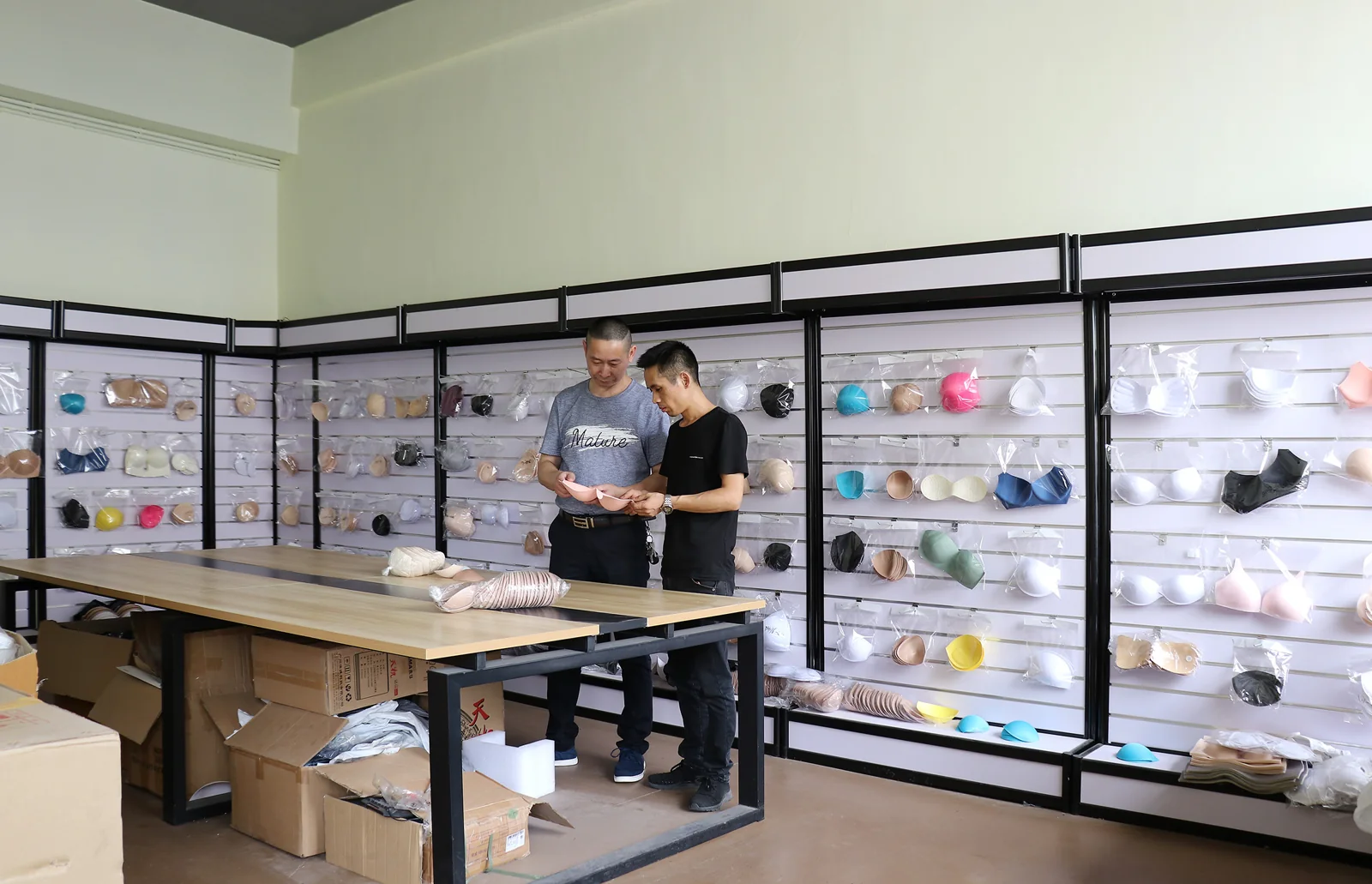
Jinhong sample showroom from the company photo archive
Yiwu Jinhong · Company photo archive supplied November 2026

TWO WAYS TO START

Build on a reference. Or develop your own.

OEM · An existing reference

Begin with a matched cup or pad and define the required specification, brand labels and packing. Confirm which changes can use existing tooling and which need new samples.

Starting materials
Reference model + size and colour breakdown + label artwork

ODM · Sample or drawing development

Bring your sample, drawing or material reference. Review garment fit, cup geometry and layer construction with the development team, then agree tooling and sample revisions.

Starting materials
Sample or drawing + marked dimensions + material requirements

Service types are described in Jinhong’s 2024 company presentation. Current MOQ, sample and mould charges, production timing and packing services are agreed for the specific project.

PEOPLE, MATERIALS & TOOLING

Development expertise, inside the factory.

Jinhong’s company introduction describes an in-house development team and CNC machining centre, with experience developing moulded cups using new fabrics and specialised foams.

01

A dedicated development team

The team includes a technical director, pattern-room specialist, sample maker and development manager. Bring the garment reference and the cup requirements together so shape, construction and fit can be reviewed in one brief.

02

In-house CNC machining

With 4,000+ mould sets reported in the company profile, development can begin by assessing existing tooling. Where a new shape is needed, agree the tooling route, ownership and sample approval before production.

03

Fabric and foam development

Discuss face fabric, backing, foam, layer order and the required feel as a complete construction. New combinations need sample approval; material certificates must match the materials actually selected.

Equipment described in the 2024 factory presentation

  • Hot-melt lamination
  • Cup-moulding presses
  • Hydraulic cutting
  • Automated cutting tables
  • Overlocking equipment
  • CNC machining

The equipment route is selected for the agreed material and construction. Machine availability and the exact processing sequence are confirmed for the project.

Development capabilities: company introduction supplied on 17 November 2026. The public website catalogue is a selection of product listings, not a count of every factory style or mould.

DEFINE YOUR COMPONENT

Six conversations that shape the brief.

Jinhong’s published company material describes OEM and ODM services. Use these six areas to request an evaluation; available combinations and development feasibility depend on the chosen construction.

01

Shape & fit

Outline, cup depth, coverage and left/right pairing. Share the garment pattern or pocket dimensions alongside the cup reference.

PrepareMarked drawing + reference model
02

Thickness distribution

Centre, edge and any padded area can require different values. Record each position, unit and measurement method.

PrepareThickness map + agreed tolerance
03

Foam & fabric layers

Identify the foam, face and backing fabrics, layer order and requested feel. Material substitutions need a separate sample review.

PrepareLayer specification + material reference
04

Colour & surface

Provide a physical colour reference or colour code and identify which surface it applies to. Approve the actual material sample.

PrepareColour reference + approved sample
05

Edge & attachment

Describe a sewn-in cup or removable insert, its edge profile, seam area and pocket opening. Check the component inside the intended garment.

PrepareAttachment details + garment fit review
06

Quantity & packing

Split quantities by model, size and colour. State pairs or pieces, labels, pack counts and the receiving country.

PrepareOrder breakdown + packing brief

Company and process photographs: Yiwu Jinhong’s public supplier profile, recorded 30 September 2026. Development services are also described in its 2025 exhibitor entry. Supplier profile · 2025 exhibitor directory

FROM REFERENCE TO APPROVED SAMPLE

Agree the next step, and what it produces.

  1. 01

    Reference review

    Start with a catalogue model, a drawing or your sample. List what matches and what needs to change for the garment.

    Working recordA defined development scope

  2. 02

    Materials & tooling

    Review material layers and cup geometry. Confirm whether a new mould is required, plus ownership, costs, revisions and the sampling schedule.

    Working recordAgreed sampling terms

  3. 03

    Sample & garment fit

    Measure the marked positions and assess the sample in the garment. Record changes against a sample revision so the next review uses the same reference.

    Working recordAn approved sample + measurement record

  4. 04

    Bulk specification

    Confirm the approved construction, quantity breakdown, inspection points, packing and delivery terms before arranging the order.

    Working recordA specification for the actual order

The steps describe the proposed project workflow. Sample charges, revisions, timing and order conditions are agreed before work begins.

THICKNESS & CONSTRUCTION

Specify the position. Then the number.

A cup does not have to be equally thick everywhere. A listed thickness is a reference value until the measurement position, material condition and tolerance are agreed.

ABC
Schematic only · Thickness distribution varies by construction
A · Centre
Mark the central point on the drawing.
B · Edge
Specify the location and distance from the cut edge.
C · Padded area
If present, mark its position and maximum thickness.

Use one unit, preferably mm. Agree whether fabric layers are included, the contact pressure during measurement and the allowed variation. Cup depth is a separate dimension.

Actual catalogue references

These are separate product listings, not three thickness options for the same model or a factory-wide production range.

Removable Bra Pads (0.4 cm, Foam) · JHL803
JHL8034 mmListed value: 0.4CM
View model
Bra Pads for Swimwear (0.7 cm, Removable) · JHL772
JHL7727 mmListed value: 0.7CM
View model
Bra Cups for Sports Bras (1.2 cm, Removable) · JHL656 · 1601688976160
JHL65612 mmListed value: 1.2CM
View model

Source detail attributes, collected September–October 2026. These are supplier-stated values; measurement positions and order specifications need confirmation.

Read the measurement guide

READY FOR A SAMPLE CONVERSATION

One clear brief. A better starting point.

Use the worksheet to collect your reference, material layers, thickness positions and quantities. Copy the key requirements into your enquiry, or export the completed worksheet as a PDF to attach.

Include in your brief

  • Model or reference sample + garment application
  • Marked dimensions, thickness positions + layer structure
  • Quantity by size and colour + pairs or pieces
  • Receiving country + requested sample date

Feasibility, tooling, MOQ, sample charges, revisions and timing are confirmed for the actual project.

Before development begins.

Do I need a new mould?

It depends on the requested geometry and the available reference. Share a marked drawing or sample so the mould requirement, ownership and cost can be assessed.

Can you match a specified thickness?

Submit the target at each marked position with the layer construction, measurement method and tolerance. Feasibility is reviewed for the material and shape; the catalogue examples are not a universal manufacturing range.

What are the MOQ and sample lead time?

They are quoted for the model, size and colour breakdown, material and tooling needs. State your required quantity and requested date so the proposal can address the actual project.

Specifying flexible PU foam

For flexible polyurethane foam, density is mass per volume (kg/m³). The Polyurethane Foam Association describes firmness as the force at 25% indentation, and support factor as force at 65% divided by force at 25%. If PU foam is proposed, ask for the sample thickness, test method and results for that grade before comparing two materials.

Reading a bra’s fibre label

For bras sold in the EU, Annex IV allows the composition of the whole product or of specified components. For the component route, obtain the fibre percentages for the inner and outer fabrics of both the cups and the back. Ask the garment maker which route its label uses before approving a fabric change.

SOURCING NOTES

What should a custom bra cup development brief include?

Start with a model, drawing or reference sample and the garment application. Define shape, marked thickness positions, foam and fabric layers, colour, attachment and quantities by size. Yiwu Jinhong describes OEM/ODM services in its published company material; feasibility, tooling, sample costs, revisions, MOQ and timing are agreed for the actual project.